
You finish the read aloud. You close the book, look out at your class, and ask what the main character is like.
“Nice.”
You wait. Someone else raises a hand. “Mean.”
And then you get nice again, from a student who did not hear the first one.
If you teach third, fourth, or fifth grade, you have lived this. I have too, more times than I want to admit. The good news is that the character traits activities that fix this are not complicated, and they do not require you to reteach the whole standard. Your students already understand the characters. They just do not have the words yet, and nobody has shown them what to do with the words once they have them.
Here is what actually moves them past nice and mean.
Why Students Get Stuck on Nice and Mean
Two things are happening, and they are not the same problem.
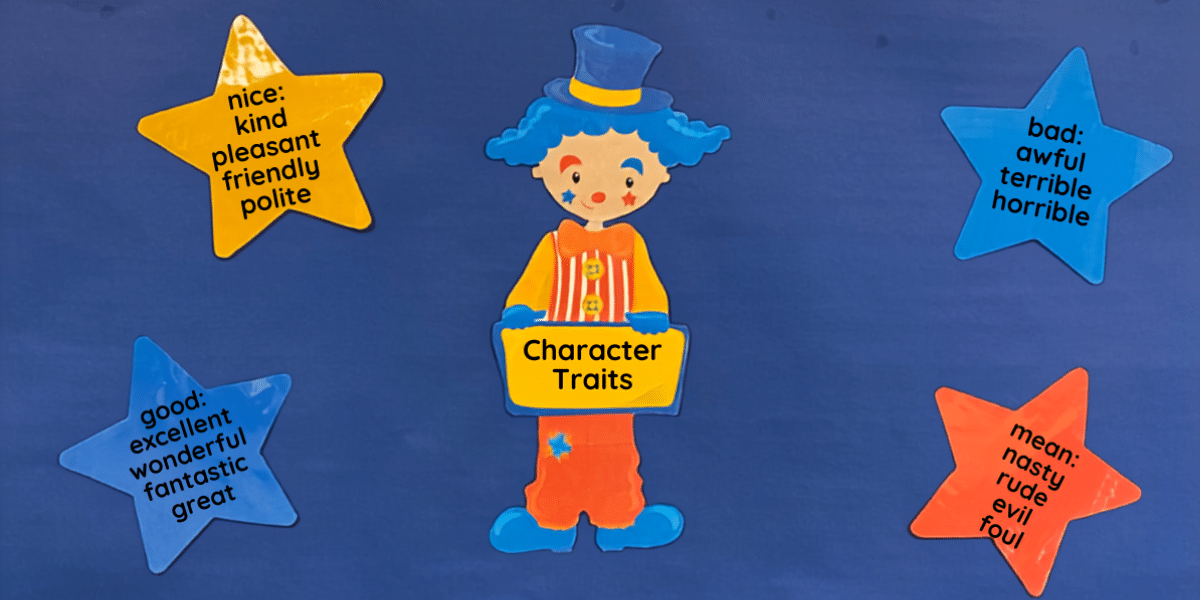
The first is vocabulary. Your students have somewhere around six trait words available to them under pressure. Nice, mean, good, bad, funny, sad. When you ask a question and a student has to answer out loud in front of everyone, they reach for the closest word they own. That word is almost always nice.
The second is the trait and feeling mix-up. Ask a class to describe a character, and half of them will tell you the character was angry. That is a feeling, not a trait. Feelings change page to page. Traits hold across the story. Students who cannot separate those two will describe a character’s worst moment and call it who they are.
Once you can see which problem a student is having, the fix gets a lot faster. A student with no words needs a bank. A student mixing up traits and feelings needs the two sorted side by side so the difference is visible. I saw this a lot with my third graders. I would have a word wall on the board that had synonyms they could use instead of nice, mean, etc.
Character Traits Activities for Whole Group
These are the ones I go back to, and they all work with a book you already own.
1. Trait and evidence pairs. Stop three times during a read-aloud. Each time, students write one trait word and one thing the character said or did that proves it. That is the whole activity. The pairing is what matters, because a trait without evidence is just a guess, and students who practice pairing stop guessing.
2. Sort the words first. Before students analyze anything, hand them a stack of trait words and have them sort into positive, negative, and neutral. This character traits sorting activity takes ten minutes, and it does more for their vocabulary than any worksheet. Students argue about where words go, and the arguing is the point. Is stubborn negative? Sometimes. Is it always?
3. The trait swap. Give the class one piece of evidence from the story. Then ask them to defend two different traits using that same evidence. A character who refuses to give up is either determined or stubborn, depending on how you read it. This one is harder than it looks, and your strongest readers will love it.
4. Beginning and end. Students name one trait for the character at the start of the story and one at the end, then explain what changed them. This is the activity that pushes past identifying and into analysis, and it sets up character relationships work later.
None of these need prep.
Books That Make Character Traits Activities Work
The right mentor text does half the teaching for you. What you want is a character whose traits show up through actions rather than a narrator telling you outright.
Enemy Pie by Derek Munson. My go-to. The narrator’s feelings about Jeremy change completely over one day, which makes it perfect for beginning and end work. I have a full Enemy Pie lesson plan built around traits and feelings if you want the graphic organizers done for you.
The Invisible Boy by Trudy Ludwig. Brian barely speaks, so students have to infer everything from what he does. Great for a class that leans on dialogue too heavily.
The Day You Begin by Jacqueline Woodson. Strong for talking about how a character feels versus who a character is, which is the exact distinction students struggle with.
A Bad Case of Stripes by David Shannon. Camilla’s traits drive the entire plot, so this one works well when you want students to connect a trait to a consequence.
If you want more titles, I pulled together five of my favorite back to school read alouds and several of them work for character work too.
Character Analysis Activities for Stations and Small Groups
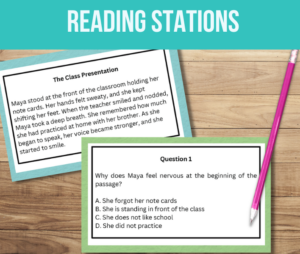
Whole group gets students started. Character analysis activities in stations are where the skill actually sticks, because that is where students do the thinking without you sitting next to them.
The problem with most station work is that it turns into a worksheet with a fancier cover. Students fill in blanks, you collect a stack of papers, and nobody gets better at anything.
What makes a character analysis station work:
- Original passages, not book-dependent. If the station requires a specific book, only the group that read it can use it. Short passages written for the skill let any student sit down and start.
- A model they can see. One completed example, laminated and sitting in the station, cuts your explaining time to almost nothing. Students check the example instead of raising a hand.
- A word bank inside the station. This is the piece most stations skip. If the whole problem is that students do not have trait words, the station has to hand them the words.
- Evidence built into the format. Not “what trait?” but “what trait, and copy the sentence that proves it.”
That last one changes everything. When copying evidence is a required box on the page, students stop skipping it. Just make sure the stations are fun and interactive. If the kids are bored, that’s when problems arise. Trust me, I know from experience!
Grab a Free Character File
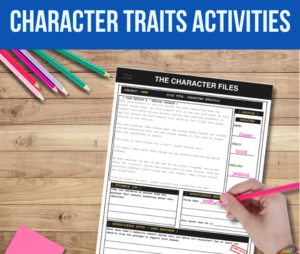
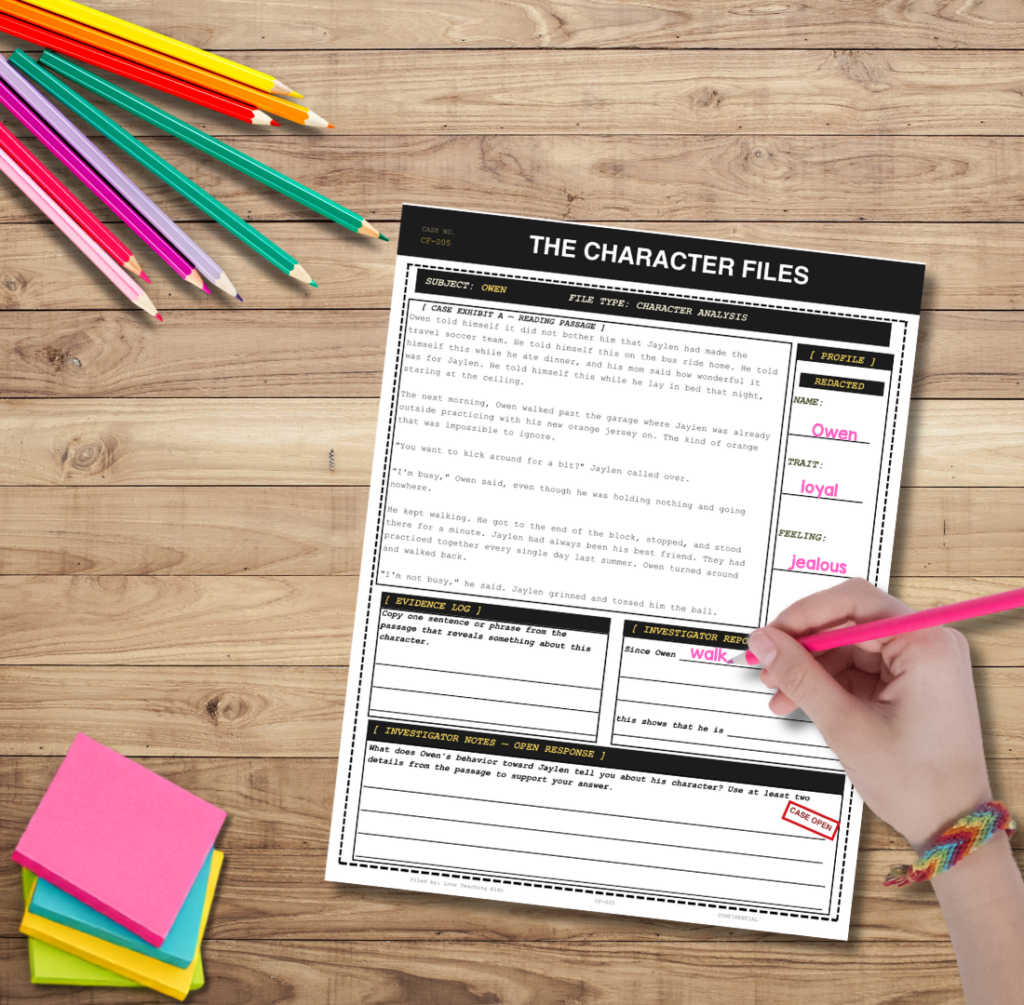
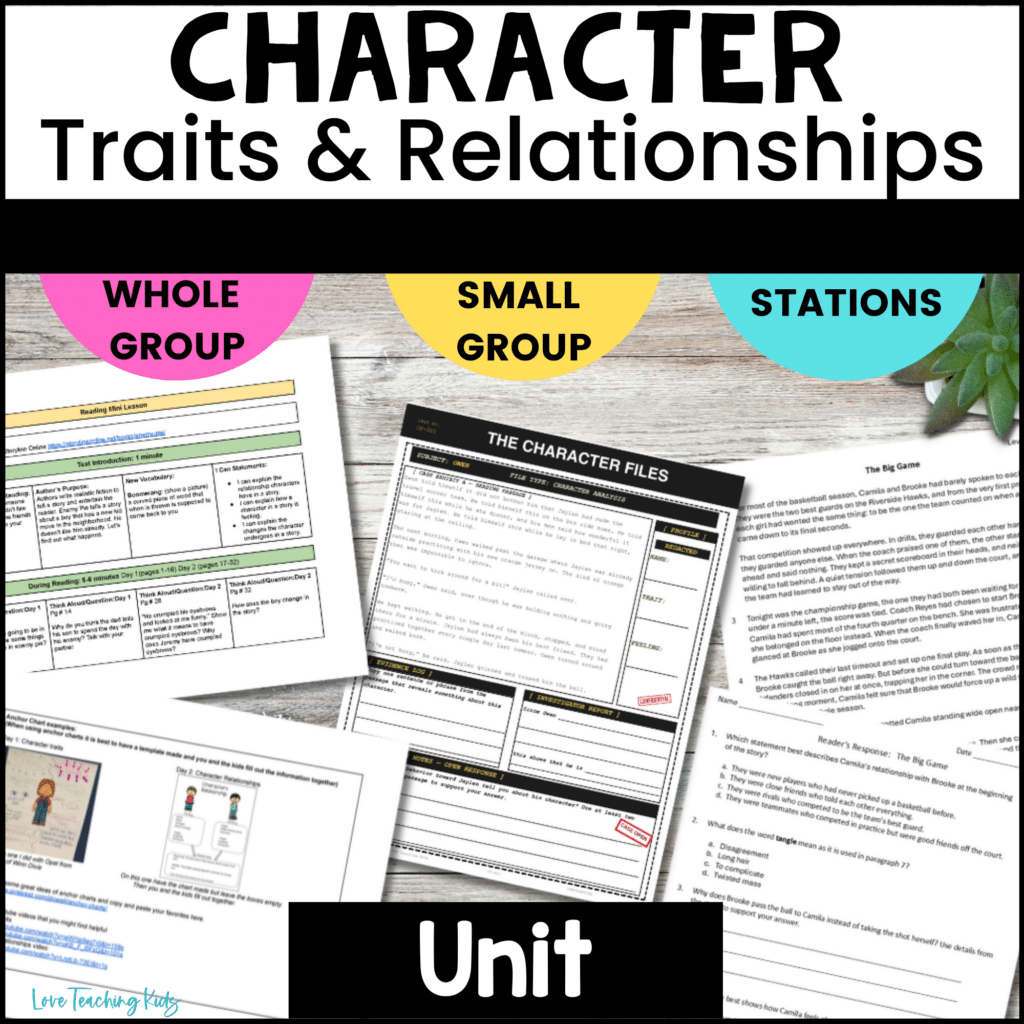
I built The Character Files around exactly this. Students become investigators working a case, and the case is a character.
I am giving you one full file to try:
- One character case file with an original fiction passage
- The example file with answers already filled in, so you can model it in about five minutes
- The investigator support sheet, which is a word bank of character traits and feelings words
- The answer key with a sample strong response
The support sheet is the piece I would grab first. It is the direct fix for the nice-and-mean problem, and your students can use it with any book or passage you are already teaching, not just this one. Click here to get this character traits activities file.
Putting It Together in a Week
If you want a loose plan rather than a full character traits lesson plan, this sequence works:
- Monday. Sort the trait words. Build the anchor chart together.
- Tuesday. Read aloud with trait and evidence pairs, three stops.
- Wednesday. Trait swap using one piece of evidence from Tuesday’s book.
- Thursday. Beginning and end with a second, shorter text.
- Friday. Students work a case file independently at a station while you pull a small group.
Five days, one skill, and by Friday you can actually see who has it.
If you want the whole thing planned for you, my Character Traits and Relationships unit includes the whole group lessons, the small group lessons, and the stations together.
You do not need a new curriculum to fix nice and mean. You need better words and a reason to prove it.
Until next time,
Jennifer