
It’s that time of year.
The standards are covered. The state tests are done. And you’ve still got weeks of school left with a room full of students who are mentally already on the beach.
Sound familiar?
Here’s what you can do instead of fighting it: let them plan a vacation.
This end of year math project is one of my all-time favorites, and I’ve been using it in my classroom for years. It’s cooperative, it’s engaging, and it actually involves real math- addition, subtraction, budgeting, decision-making, and a little bit of “wait, we went over budget, what do we do now?”
What Is the Plan a Vacation Math Project?
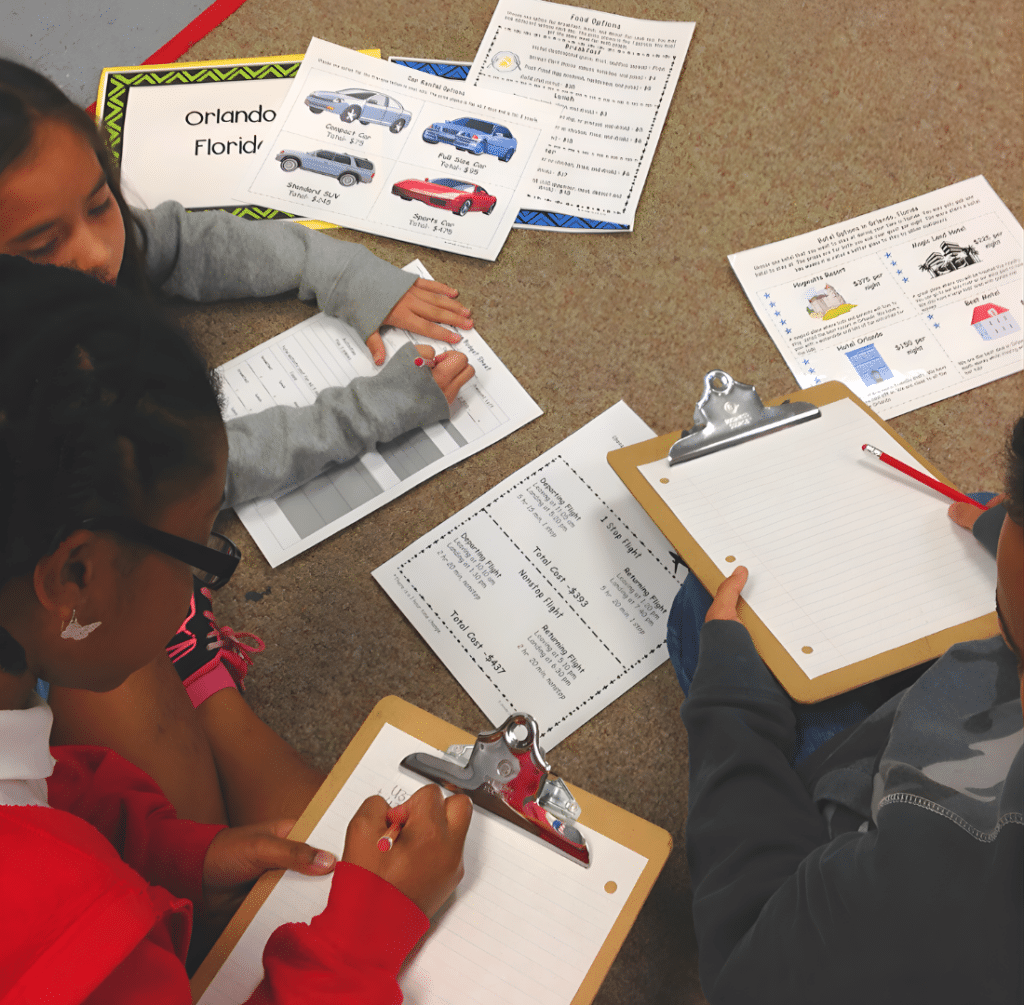
This is a cooperative math activity where small groups of students plan a vacation for themselves and a guest. They have a budget of $2,500- and they cannot go over it.
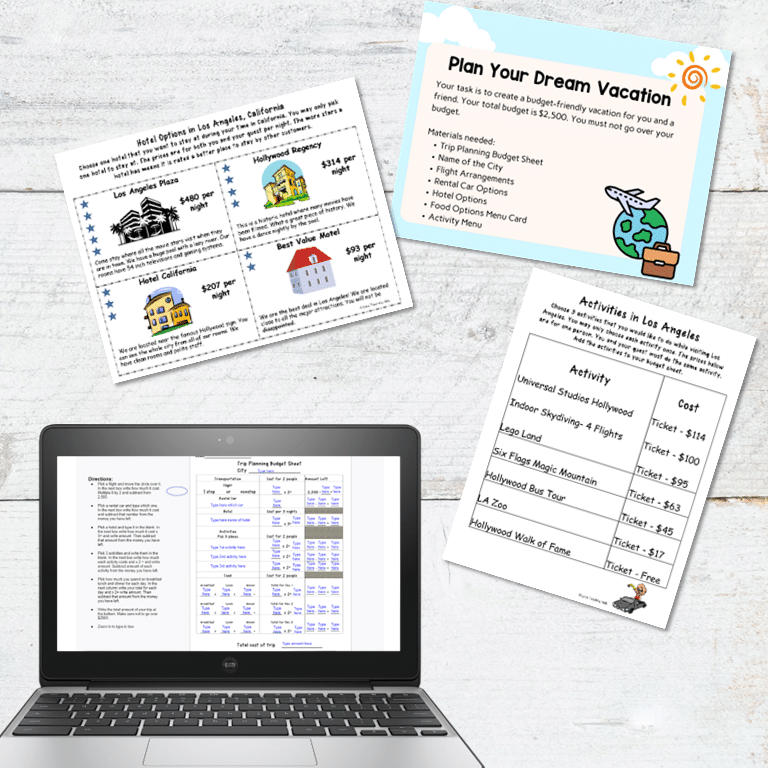
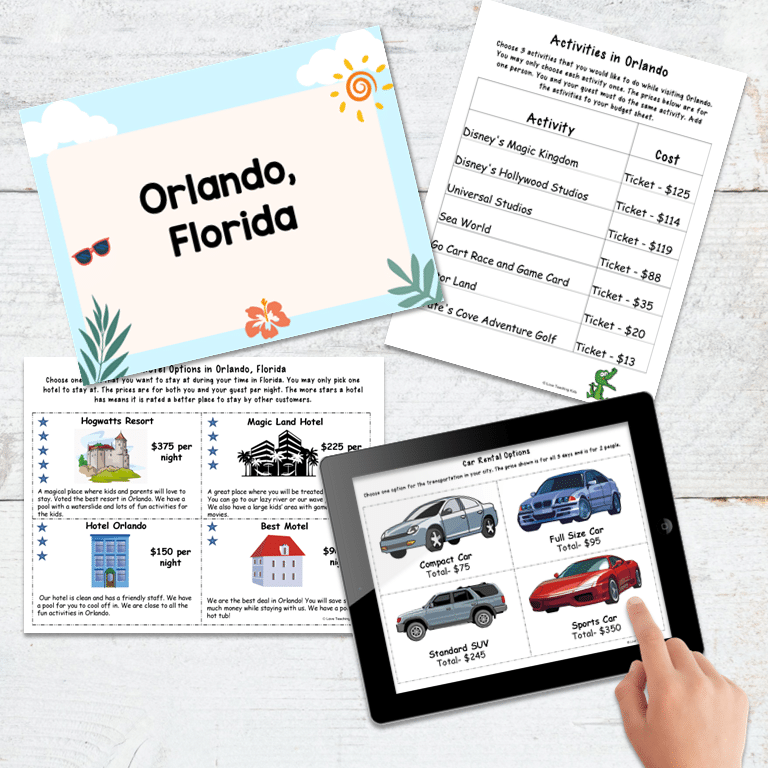
To plan their trip, each group has to choose:
- Flight– one option for their destination city
- Car rental– transportation while they’re there
- Hotel – with different options at different price points (more stars = higher cost)
- Activities– things to do during their trip
- Food– breakfast, lunch, and dinner for each day
All the choices are laid out for them with prices. Their job is to make decisions, add it all up on a budget sheet, and stay within $2,500. The catch: they want to get as close to $2,500 as possible without going over. That keeps them thinking right up to the end.
It’s real-world math. It’s financial literacy. And it genuinely gets kids talking, debating, and problem-solving together.
What Math Skills Does It Cover?
This isn’t a “fun Friday” filler activity- it’s a legitimate math review. While students are planning their vacation, they’re practicing:
– Multi-digit addition- calculating the running total of all their choices
– Subtraction- figuring out how much budget they have left
– Multiplication- meals and some costs are priced per person or per night
– Budgeting and money management- deciding between choices based on cost
– Rounding and estimation- checking whether they’re close to the limit before committing
For grades 3, 4, and 5, this hits real math standards in a context that actually makes sense to kids. They’re not adding random numbers on a worksheet. They’re adding because it matters to their vacation.
How to Run Plan a Vacation in Your Classroom
This activity is flexible, which is one of the reasons I love it. Here are a few ways to set it up:
Option 1: Small Groups (My Favorite)
Put students in groups of 3–4. Assign each student a job to keep everyone engaged:
– The Mathematician- does the calculating
– The Recorder- writes the choices on the budget sheet
– The Checker- double-checks all the math
When everyone has a role, there’s less off-task behavior and more genuine teamwork. Trust me on this one.
Option 2: Partner Work
Students work in pairs and share the responsibilities. Great if you want more individual accountability alongside the collaboration.
Option 3: Individual
Each student gets their own city and completes the project on their own. Works well as an end of year assessment or as differentiated work for early finishers.
Option 4: Whole Class
Project the city on the board and work through the decisions together as a class discussion. Great for modeling the activity before releasing students to work independently.
Option 5: Math Stations
Set each city up as its own station and have groups rotate through. This works beautifully for a multi-day activity when you want variety.
Tips for Making It Run Smoothly
A few things that have helped me get the most out of this Plan a Vacation activity:
1. Introduce the budget concept first.
Before you hand anything out, talk briefly about what a budget is and why people use one. Most students have heard the word but don’t really know what it means in practice. A 3-minute class conversation goes a long way.
2. Let them make “bad” choices at first.
It’s tempting to jump in when a group blows their budget on the nicest hotel in the first five minutes. Don’t. Let them discover the problem and figure out how to fix it. That’s where the best learning happens.
3. Have groups share at the end.
When groups are done, have them present their choices to the class. What city did they visit? What did they choose? Did they stay under budget? The comparison conversations are great- especially when two groups had the same city and made completely different choices.
4. Use it as a jumping-off point for writing.
Students can write a reflection about their trip, write a postcard home, or compare their choices with another group. Other teachers have also used this as a research project on the city they worked on. It connects naturally to ELA if you want to extend it.
Try It Free- Plan a Vacation Orlando Sample
Want to see it in action before you commit?
I have a free sample you can grab right now. It’s the Orlando version of the activity and includes everything your students need to get started- destination details, choices, and the budget sheet.
👉Download the Free Orlando Vacation Sample Here
It’s a great way to try the activity with your class and see how your students respond. (Spoiler: they love it.)
Get the Full Activity
If you love the freebie, the full Plan a Summer Vacation Math Project includes 7 different destination cities so you can run multiple groups at once- with every group working on a different city. It also includes a digital version for Google Classroom.
Seven cities means no two groups are doing the same thing, which makes the share-out at the end even more interesting.
👉 Grab the Full Plan a Summer Vacation Math Project Here
Why This Works (Even for the Reluctant Math Students)
I’ve done this activity with a lot of different groups of students over the years. And the ones who usually check out during math? They don’t check out during this.
There’s something about having real choices and a real budget that changes the dynamic. It feels like it matters. Because in a way, it does- even if it’s pretend, the math is real.
That’s the sweet spot for end of year math. Rigorous enough to be worthwhile. Engaging enough that students don’t fight you on it.
If you try this with your class, come back and tell me how it went! I’d love to hear which city your students visited- and whether they managed to stay under budget.
Good luck with the end of the school year. Let me know if you tried this project with your students.
Jennifer